Practically Speaking
You'll need good shoes to walk and stand in. No seriously, be practical with foot wear choices. It’s amazing how fast your shoes will wear out. You can find cheap shoes here, but keep in mind what kind of strain you’re putting on your body by walking in shoes that are not supportive.
My grandfather stood all day for his work as a dentist and he taught me a trick. Whatever shoes you have, and however good they are, do not wear the same shoes two days in a row. Every pair of shoes is made slightly different so the pressures on your feet will be different. If you change it up, your feet (and therefore your whole body) will feel more refreshed! Trust me, it works.
Showing posts with label Living in Vienna. Show all posts
Showing posts with label Living in Vienna. Show all posts
20 October 2010
30 September 2010
Who Rules?
Below is a complete list of the rulers of the Danube Valley, known as Austria
(Margraves, Dukes, Archdukes, Emperors, and Chancellors)
Babenberg Dynasty
Margraves
Leopold I (Luitpold I., der Erlauchte) 976–994
Henry I the Strong (Heinrich I., der Starke) 994–1018
Adalbert the Victorious (der Siegreiche) 1018–1055
Ernest the Brave (Ernst, der Tapfere) 1055–1075
Leopold II the Fair (Luitpold II., der Schöne) 1075-1095
Leopold III the Good (Luitpold III., der Heilige) 1095–1136
Leopold IV the Generous (Luitpold IV., der Freigiebige) 1136–1141
Henry II Jasomirgott (Heinrich II., Jasomirgott) 1141–1156
Dukes of Austria: 1156, independent of the Duchy of Bavaria.
Leopold V the Virtuous (Luitpold V., der Tugendhafte) 1177-1194
Frederick I the Catholic (Friedrich I., der Katholische) 1195-1198
Leopold VI the Glorious (Luitpold VI., der Glorreiche) 1198-1230
Frederick II the Quarrelsome (Friedrich II., der Streitbare) 1230-1246
Interregnum: After Frederick's death, succession was disputed:
Vladislaus I of Moravia claimant 1246-1247
Herman VI of Baden claimant 1248-1250
Frederick I of Baden claimant 1250-1268
Ottokar II of Bohemia claimant 1251-1278
In 1278, Rudolph I defeated Ottokar for control of Austria. In 1282 he invested his sons with the Duchies of Austria and Styria, thereby securing it for the Habsburg dynasty.
Habsburg Dynasty
Dukes of Austria
1278-1282 Rudolph I of Germany Breisgau
1273–1291 Holy Roman Emperor, never crowned
1282-1308 Albert I of Germany 1298–1308 Holy Roman Emperor, never crowned
1282-1283 Rudolph II the Debonair
1298-1307 Rudolph III the Good
1308-1330 Frederick I the Fair
1308-1326 Leopold I the Glorious
1330-1358 Albert II the Wise
1330-1339 Otto I the Merry
1339-1344 Frederick II
1339-1344 Leopold II
1358-1365 Rudolph IV the Founder
Archdukes of Austria
With the Privilegium Maius in 1359, Rudoph IV attempted to invest the Dukes of Austria with the position of an Archduke, but not recognized until Frederick V confirmed in 1453.
1365-1379 Albert III the Pigtail
1365-1379 Leopold III
Territories divided Rule between the brothers in 1379: The Albertinian Line received the Archduchy of Austria and Lower Austria (not the modern state):
1379-1395 Albert III the Pigtail (See above)
1395-1404 Albert IV
1404-1439* Albert V*
1438–1439 Holy Roman Emperor, Albert II, never crowned
under joint guardianship of Leopold IV and Ernest (1404–1411)
Vacant 1439-1440
1440-1457 Ladislaus I the Posthumous
under guardianship of Emperor Frederick V (1440–1452)
After Ladislaus' death his territories passed to the Leopoldinian Line:
1457-1493 Frederick V*
1440–1493 Holy Roman Emperor, Frederick III
1457-1463 Albert VI the Prodigal
1490 these territories were handed over to:
1490-1493 Maximilian I
1508–1519 Holy Roman Emperor
1485-1490* Matthias Corvinus, King of Hungary
Occupied Austria proper and Styria. Claiming the title "Duke of Austria"
1519-1521 Charles I
1519–1556 Holy Roman Emperor
1521-1564 Ferdinand I
1556–1564 emperor of Holy Roman Empire
1564 The Austrian territories were divided among Ferdinand's sons:
Lower and Upper Austria (Austria proper)
1564-1576 Maximilian II
1564–1576 Holy Roman Emperor
1576-1608 Rudolph V*
1576–1612 Holy Roman Emperor, Rudolph II
1608-1619 Matthias
1612–1619 Holy Roman Emperor
1619 Albert VII
Inner Austria (Styria, Carinthia and Carniola) passed to Ferdinand III under the regency of Maximilian III. The Austrian territories were reunited again by inheritance in 1620 under Ferdinand III, Archduke of Inner Austria, but in 1623 Thirty Years' War gave him so much to do, Ferdinand divided them yet again.
Lower Austria & Inner Austria remained with the elder line:
1590 Ferdinand III*
1619–1637 Holy Roman Emperor, Ferdinand II
1637-1657 Ferdinand IV*
1637–1657 Holy Roman Emperor, Ferdinand III
Upper Austria passed to the Younger Tyrolean Line:
1623-1632 Leopold V
1632-1662 Ferdinand Charles
1662-1665 Sigismund Francis
Sigismund Francis’s territories reverted to the elder line, uniting Austria
1657/1665-1705 Leopold VI*
1658–1705 Holy Roman Empire, Leopold I
1705-1711 Joseph I
1705–1711 Holy Roman Emperor
1711-1740 Charles III*
1711–1740 Holy Roman Emperor, Charles VI
1740-1780 Maria Theresa
(1740-1780) Holy Roman Empress (Joint rule with husband and Son)
* The Austrian branch technically ended in 1780 and was replaced by the Vaudemont branch of the House of Lorraine. The new house styled itself as Habsburg-Lorraine (Habsburg-Lothringen), as agnatic descendants of Maria Theresa and Francis Stephen.
1765-1790 Joseph II
1765–1790 Holy Roman Emperor with Maria Theresa until 1780
1790–1792 Leopold VII*
1790–1792 Holy Roman Emperor, Leopold II
1792–1811 Francis II*
1792–1806 Holy Roman Emperor, also Francis I of Austria
Emperors of Austria: 1806 the Holy Roman Empire was dissolved.
1804–1835 Francis I (See above)
1835-1848 Ferdinand I
1848-1916 Francis Joseph I
1916-1918 Charles I
Chancellors of the First Republic of Austria
1918-1920 Karl Renner SDAPÖ, Social Democratic
1920-1921 Michael Mayr Christian Socialist
1921-1922 Johann Schober non-partisan (Beamter)
1922-1922 Walter Breisky Christian Socialist
1922 Johann Schober non-partisan (Beamter)
1922-1924 Ignaz Seipel Christian Socialist
1924-1926 Rudolf Ramek Christian Socialist
1926-1929 Ignaz Seipel Christians Socialist
1929 Ernst Streeruwitz Christian Socialist
1929-1930 Johann Schober non-partisan (Beamter)
1930 Karl Vaugoin Christian Socialist
1930-1931 Otto Ender Christian Socialist
1931-1932 Karl Buresch Christian Socialist
1932-1934 Engelbert Dollfuss Christian Socialist
Austro-fascist Dictatorship
1934-1938 Kurt Schuschnigg Austro-fascist Dictatorship
1938 Arthur Seyss-Inquart National-Socialist Dictatorship
Nazi Germany pressured Austrian President Wilhelm Miklas to appoint Seyß-Inquart, who oversaw the annexation of Austria by Nazi Germany in 1938. Austria's independence was restored in 1945.
Chancellors of the Second Austrian Republic
1945 Karl Renner SPÖ, Social Democratic Party
1945-1953 Leopold Figl ÖVP, Austrian People’s Party
1953-1961 Julius Raab ÖVP
1961-1964 Alfons Gorbach ÖVP
1964-1970 Josef Klaus ÖVP
1970-1983 Bruno Kreisky SPÖ
1983-1986 Fred Sinowatz SPÖ
1986-1997 Franz Vranitzky SPÖ
1997-2000 Viktor Klima SPÖ
2000-2007 Wolfgang Schüssel ÖVP
2007-2008 Alfred Gusenbauer SPÖ
2008- Werner Faymann SPÖ
(Margraves, Dukes, Archdukes, Emperors, and Chancellors)
Babenberg Dynasty
Margraves
Leopold I (Luitpold I., der Erlauchte) 976–994
Henry I the Strong (Heinrich I., der Starke) 994–1018
Adalbert the Victorious (der Siegreiche) 1018–1055
Ernest the Brave (Ernst, der Tapfere) 1055–1075
Leopold II the Fair (Luitpold II., der Schöne) 1075-1095
Leopold III the Good (Luitpold III., der Heilige) 1095–1136
Leopold IV the Generous (Luitpold IV., der Freigiebige) 1136–1141
Henry II Jasomirgott (Heinrich II., Jasomirgott) 1141–1156
Dukes of Austria: 1156, independent of the Duchy of Bavaria.
Leopold V the Virtuous (Luitpold V., der Tugendhafte) 1177-1194
Frederick I the Catholic (Friedrich I., der Katholische) 1195-1198
Leopold VI the Glorious (Luitpold VI., der Glorreiche) 1198-1230
Frederick II the Quarrelsome (Friedrich II., der Streitbare) 1230-1246
Interregnum: After Frederick's death, succession was disputed:
Vladislaus I of Moravia claimant 1246-1247
Herman VI of Baden claimant 1248-1250
Frederick I of Baden claimant 1250-1268
Ottokar II of Bohemia claimant 1251-1278
In 1278, Rudolph I defeated Ottokar for control of Austria. In 1282 he invested his sons with the Duchies of Austria and Styria, thereby securing it for the Habsburg dynasty.
Habsburg Dynasty
Dukes of Austria
1278-1282 Rudolph I of Germany Breisgau
1273–1291 Holy Roman Emperor, never crowned
1282-1308 Albert I of Germany 1298–1308 Holy Roman Emperor, never crowned
1282-1283 Rudolph II the Debonair
1298-1307 Rudolph III the Good
1308-1330 Frederick I the Fair
1308-1326 Leopold I the Glorious
1330-1358 Albert II the Wise
1330-1339 Otto I the Merry
1339-1344 Frederick II
1339-1344 Leopold II
1358-1365 Rudolph IV the Founder
Archdukes of Austria
With the Privilegium Maius in 1359, Rudoph IV attempted to invest the Dukes of Austria with the position of an Archduke, but not recognized until Frederick V confirmed in 1453.
1365-1379 Albert III the Pigtail
1365-1379 Leopold III
Territories divided Rule between the brothers in 1379: The Albertinian Line received the Archduchy of Austria and Lower Austria (not the modern state):
1379-1395 Albert III the Pigtail (See above)
1395-1404 Albert IV
1404-1439* Albert V*
1438–1439 Holy Roman Emperor, Albert II, never crowned
under joint guardianship of Leopold IV and Ernest (1404–1411)
Vacant 1439-1440
1440-1457 Ladislaus I the Posthumous
under guardianship of Emperor Frederick V (1440–1452)
After Ladislaus' death his territories passed to the Leopoldinian Line:
1457-1493 Frederick V*
1440–1493 Holy Roman Emperor, Frederick III
1457-1463 Albert VI the Prodigal
1490 these territories were handed over to:
1490-1493 Maximilian I
1508–1519 Holy Roman Emperor
1485-1490* Matthias Corvinus, King of Hungary
Occupied Austria proper and Styria. Claiming the title "Duke of Austria"
1519-1521 Charles I
1519–1556 Holy Roman Emperor
1521-1564 Ferdinand I
1556–1564 emperor of Holy Roman Empire
1564 The Austrian territories were divided among Ferdinand's sons:
Lower and Upper Austria (Austria proper)
1564-1576 Maximilian II
1564–1576 Holy Roman Emperor
1576-1608 Rudolph V*
1576–1612 Holy Roman Emperor, Rudolph II
1608-1619 Matthias
1612–1619 Holy Roman Emperor
1619 Albert VII
Inner Austria (Styria, Carinthia and Carniola) passed to Ferdinand III under the regency of Maximilian III. The Austrian territories were reunited again by inheritance in 1620 under Ferdinand III, Archduke of Inner Austria, but in 1623 Thirty Years' War gave him so much to do, Ferdinand divided them yet again.
Lower Austria & Inner Austria remained with the elder line:
1590 Ferdinand III*
1619–1637 Holy Roman Emperor, Ferdinand II
1637-1657 Ferdinand IV*
1637–1657 Holy Roman Emperor, Ferdinand III
Upper Austria passed to the Younger Tyrolean Line:
1623-1632 Leopold V
1632-1662 Ferdinand Charles
1662-1665 Sigismund Francis
Sigismund Francis’s territories reverted to the elder line, uniting Austria
1657/1665-1705 Leopold VI*
1658–1705 Holy Roman Empire, Leopold I
1705-1711 Joseph I
1705–1711 Holy Roman Emperor
1711-1740 Charles III*
1711–1740 Holy Roman Emperor, Charles VI
1740-1780 Maria Theresa
(1740-1780) Holy Roman Empress (Joint rule with husband and Son)
* The Austrian branch technically ended in 1780 and was replaced by the Vaudemont branch of the House of Lorraine. The new house styled itself as Habsburg-Lorraine (Habsburg-Lothringen), as agnatic descendants of Maria Theresa and Francis Stephen.
1765-1790 Joseph II
1765–1790 Holy Roman Emperor with Maria Theresa until 1780
1790–1792 Leopold VII*
1790–1792 Holy Roman Emperor, Leopold II
1792–1811 Francis II*
1792–1806 Holy Roman Emperor, also Francis I of Austria
Emperors of Austria: 1806 the Holy Roman Empire was dissolved.
1804–1835 Francis I (See above)
1835-1848 Ferdinand I
1848-1916 Francis Joseph I
1916-1918 Charles I
Chancellors of the First Republic of Austria
1918-1920 Karl Renner SDAPÖ, Social Democratic
1920-1921 Michael Mayr Christian Socialist
1921-1922 Johann Schober non-partisan (Beamter)
1922-1922 Walter Breisky Christian Socialist
1922 Johann Schober non-partisan (Beamter)
1922-1924 Ignaz Seipel Christian Socialist
1924-1926 Rudolf Ramek Christian Socialist
1926-1929 Ignaz Seipel Christians Socialist
1929 Ernst Streeruwitz Christian Socialist
1929-1930 Johann Schober non-partisan (Beamter)
1930 Karl Vaugoin Christian Socialist
1930-1931 Otto Ender Christian Socialist
1931-1932 Karl Buresch Christian Socialist
1932-1934 Engelbert Dollfuss Christian Socialist
Austro-fascist Dictatorship
1934-1938 Kurt Schuschnigg Austro-fascist Dictatorship
1938 Arthur Seyss-Inquart National-Socialist Dictatorship
Nazi Germany pressured Austrian President Wilhelm Miklas to appoint Seyß-Inquart, who oversaw the annexation of Austria by Nazi Germany in 1938. Austria's independence was restored in 1945.
Chancellors of the Second Austrian Republic
1945 Karl Renner SPÖ, Social Democratic Party
1945-1953 Leopold Figl ÖVP, Austrian People’s Party
1953-1961 Julius Raab ÖVP
1961-1964 Alfons Gorbach ÖVP
1964-1970 Josef Klaus ÖVP
1970-1983 Bruno Kreisky SPÖ
1983-1986 Fred Sinowatz SPÖ
1986-1997 Franz Vranitzky SPÖ
1997-2000 Viktor Klima SPÖ
2000-2007 Wolfgang Schüssel ÖVP
2007-2008 Alfred Gusenbauer SPÖ
2008- Werner Faymann SPÖ

23 September 2010
Tips for Those Not Used to Public Transport

- Avoid using your phone on public. You will see people who talk loudly but many people find it rude. Keep conversations to a quiet minimum and/or do as they do and text conversations.
- The silent dance: Be aware of those people whom you are blocking the door on buses and U-bahns. They will silently begin to adjust their things to imply they’re getting off at the next stop. Move a bit yourself in response to their subtle movements to show you’re aware and prepared to move. When the car begins to stop, move out of their way and nod in greeting as they pass. This is a successful transition!
- Occasionally people on crowded cars will ask if you’re getting off at the next stop to indirectly tell you they are getting off at the next stop. This also usually means that if you’re not getting off then they want to trade places with you to have an easier time getting off the car.
- Keep your bags in front of you as much as possible. This not only a security tip: you will also annoy your fellow riders less if you take up less room and not knock out an old lady with your backpack.
- If the car is mostly empty, feel free to use the seat next to yours to set bags, et at. However, if there are less than about 3 seats within view put you bags in you lap and tucked behind/in between your feet.
- Don’t feel you have to keep your ticket out, but know where it is at all times. Controllers check tickets at random on platforms, in cars, and at exits. They check the commuter trains coming and going from the airport most often.
- Remember that the Vienna airport is in Zone 2, so even if you have a regular Vienna ticket, you need to get an additional 1 zone ticket to and from the airport.
Catholic Underneath

Vienna’s connection to the Catholic Church is rather subtle, apart from the opulent churches on every plaza. Few young people participate in religious life and only about seven percent of all Austrians attend services weekly, which is typical throughout post-Christian Europe. Nevertheless, the social memory remains that to be Austrian is to be Catholic.
During the Counter-Reformation the Hapsburgs called for complete loyalty to the social system of the monarchy and the Church and there were severe consequences for those who rebelled. Indeed, those who stood against the Baroque Church left the country, were imprisoned, or were killed. Baroque architecture was tantamount to a propaganda campaign for people to join in and conform. While more liberal ideas have won the day, the social memory remains.
Today, Viennese school children are taught Catholic teachings (or "Evangelical" which is rather vague Christian stories if the parents write a request for special classes) in state school religion classes from the first grade. Parents consider it the job of the state to educate their children about all things including religion. Most of the young people I talked to had no at home education about their faith. The education is mainly teaching the Christian stories, such as the stories of saints, and the dogma of the Catholic Church. All school children attend Mass on the first and last days of the school year as a school trip.
In time the children's science teachers or another adult told some other option for belief, such as simple idea of Darwinian evolution, so many quietly turned their minds away from the Church. Nevertheless, the allure of presents and money brought most to fulfill confirmation classes. Indeed, most continue to go to Catholic religion classes into Gymnasium (prep school). By that time, the religion classes were mostly philosophy, ethics, and sex education. No other Christian denominations were taught in Catholic religion classes, but other world religions were surveyed.
As on student explained, “To the outside they spoke of God on the mountain top and that all ways reached the top. But, on inside, it was clear that [Catholic] teaching was the only way for us.” This seems to be the Austrian take on post-modernism is: All ways may be okay in other cultures, but for us - our tribe - we show solidarity by going along with out heritage, despite unconvincing teaching, because it is part of us.
This religion education surfaces in conversation with Viennese. In my experience, there are two main responses: Some write-off religion as an uninteresting subject that they have already passed; others are deeply intrigued with all faiths, as though their religion classes on wet their appetites to understand how other people worship. As a protestant Christian who is deeply dedicated to Jesus Christ and a free thinking person, I obviously have a more interesting time with the second group. However, I've been mutually surprised by the members of the first group who suddenly speak of deep existential issues which apparently were outside their understanding of Faith.
The bond to the Church also remains in the form of strong family ties. Food, feasts, holidays, and celebrations of rites of passage is still all directed to the memory of their Catholic legacy. Children are christened into the community and confirmed with presents in early adolescence. Most married Viennese eat at home with the family, and turning the TV on during this sacred time is not acceptable in most households. The family is first, especially for women according to the Church, and to prioritize anything above family time is simply not acceptable.
Unfortunately, religious ideals are often upheld with negative reinforcement. One student recalled being shamed by the priest and a mother of one of her classmates for ending her ministry to the church as a candle holder at services when she was a child as the though the integrity of the community were depending on her. Even though her mother had left the church, as an aspiring lawyer this student told me that it would be bad for business connections to leave the community completely.
Part of this honor-shame control in the community for conformity, there is a certain formality and way in which you engage with people socially that is still very hierarchical. Younger people speak to elders first in respect, as do new people to the established neighbors. The elder ladies of communities are more or less seen as guardians of Ruhe und Ordnung (quiet peace and order). If one calls attention to a faux pas, it is best to humbly acquiesce even if you'd rather tell her to mind her own business.
Of course, there are frequent rebellions against this system, but for an outsider, it's important to understand that there is a system to begin with.
14 September 2010
Who Was Karl Leuger?
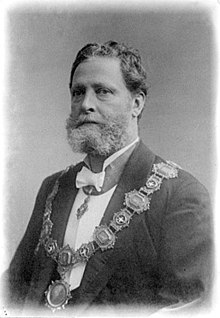
As one drives along the most monument filled area of the Ringstrasse, one may notice that part of the famous street as well as two statues remember Karl Leuger.
As opposed to the extremes of others of the time, Karl Leuger, was a more pragmatic “Schwarz-gelb,” a believer in Austria with populist ideals at the turn of the century. An opportunist, Leuger changed to the democratic camp and used anti-Semitism to promote Vienna’s native son to higher offices. He quickly broke with anti-Semitic extremism of Schönerer to create the Christian Socialist Party, centered on the interest of “little men” and “Greater Austria.” However, he did continue to support the Germanic supremesist, Guido von List.
His time in office as mayor of Vienna (1897 to 1910) was highlighted by improvements in city living: construction of public buildings; development of the tramway systems; the Wiener Hochquellwasserleitung, which still brings fresh water from nearby the mountains; and the creation of a greenbelt of meadows and forests around the city.
However, Leuger’s policies slid in to dictatorship as the people worshiped their new hero, leaving a legacy that is said to have led the way to Austro-Fascism and even Hitler's reign of terror.
As one hymn sung his praises:
Let us praise the hero, who leads us in the fight.
Joyfully show him praise and thanks which are his due.
Let us also raise our hands in prayer,
May God make us victorious, wherever his banner flies.
13 September 2010
2. Bezirk Leopoldstadt
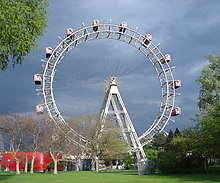
Leopoldstadt or Leopold-Town is Vienna's 2nd district. There are over 95,000 inhabitants and is about 7 sq miles. Leopolstadt and, Brigittenau, the 20th district), form a large island surrounded by the Danube Canal and the Danube River.
 History of Leopoldstadt
 In 1625 Rabbi Yom-Tov Lipmann Heller became the rabbi of Vienna and was instrumental in reorganizing the Jewish community of Vienna and drew up its constitution. Heller obtained for the Jews the rights to establish a central Jewish community in Leopoldstadt, which was a suburb of Vienna at the time. In the mid-17th century, part of the area was used as a Jewish ghetto, called "Im Werd." The Jewish population was called "Unterer Werd."
Leopold I, expelled the Jews and the Jewish community (gesera), with the popular support. The new non-Jewish inhabitants renamed the area Leopoldstadt in thanks. However, Jewish immigrants from eastern parts of the realm tended to immigrate to Leopoldstadt though the centuries. The high number of Jewish inhabitants led to the area being called Mazzesinsel (Island of Mazzes bread). Several important synagogues such as the Schiff Shul, the Leopoldstädter Tempel, Türkischer Tempel, Polnische Schul and Pazmanitentempel and yeshivas were located there.
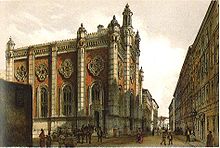 The Kristallnacht pogroms of November 1938 following the annexation of Austria by Nazi Germany were so successfully destructive, none of the synagogues survivied. The Jewish population was systematically isolated, terrorized, and finally deported and murdered in the concentration camps. The once thriving communal life was completely destroyed. Only a handful of survivors were able to hide until the end of the war.
The fall of the Iron Curtain in 1989 renewed immigration from Eastern Europe, especially from the former Soviet Union, with a new Jewish population. Today, Leopoldstadt is again the center of Vienna’s Jewish community with kosher shops. Lately, the old residential areas are being gentrified. The new extension of the U2 metro line was opened in May 2008.
Sites of Leopoldstadt
The Wiener Prater (from Latin pratum "meadow"), which was the former imperial hunting grounds, takes the majority of the land of the 2nd district and was opened to the public in 1766. The Prater is home to a large amusement park, known as the Volksprater (People's Prater) or Wurstelprater (after the Harlequin-type figure of Hanswurst). The giant Wiener Riesenrad (Ferris wheel) that was opened there in 1897. This Ferris wheel has become a symbol of the city and is features prominently in the movie The Third Man. There is also a miniature steam railway called the Liliputbahn through the wooded park land. The Schweizerhaus (Swiss House) has a huge beer garden and its owners claim that, the potato crisp was invented there in the 1920s. Nearby you can find the Republic of Kugelmugel, a micronation proclaimed in 1984.
Another small park in Leopoldstadt is the Augarten, which is the home of the Vienna Boys' Choir and of a porcelain manufactory, Augarten-Porzellan. Its most distinguishing marks are two disused Flak towers built towards the end of the Second World War.
Other sites:
* Galopprennplatz Freudenau
* Johann Strauss Museum (Vienna Museum)
* Augarten Bridge
* Odeon
* Leopold Church
* "Mexico Church"
* Tegetthoff Monument
* Vienna Crime Museum
* District Museum Leopoldstadt
Other notables:
The Museum für Unterhaltungskunst - the history of clowns, artists and circuses
the Museum des Blindenwesens - the development of teaching the blind and Braille.
The Augarten Contemporary (contemporary art) and the neighboring
Gustinus-Ambrosi Museum.
The State of Vienna University
So far, this is what I under stand is going on with the university system in Vienna.
Education federal funding allowed for free university admission which created educational boom in the beginning of the millennium. With the increase of students, construction of new buildings and the redevelopment of old ones was needed. Study fees were introduced by the center-right coalition in 2001.
Then, with the University Act of 2002, all Austrian universities became autonomous, self-dependent and performance-orientated. As a result, the University of Vienna reorganized in 2004, making the Medical Faculty became a separate university.
Now, the University of Vienna is home to 86,000 students from 130 countries who choose from fifty four bachelors, 112 masters, five Diploma and eight PhD programs, comprising fifteen faculties and three centers at over sixty locations throughout Vienna to give 10,000 lectures at the University of Vienna a year.
Like the city, the University of Vienna orientated towards international research and teaching including the Erasmus-Socrates Program and membership in several international networks.
Meanwhile, the effects of education cuts have begun to take the toll with result from worldwide university rankings. The debate over a reintroduction of study fees at Austrian colleges and universities has intensified over the past year and will probably continue as the University of Vienna was knocked down eleven places on a British research firm’s World University Ranking, from 132 to 142. The university was given just 55.27 overall points.
The People’s Party to had tried to abolish the mandatory fees students before the 2008 general elections after the end of the grand coalition of the ÖVP with the Social Democrats. Both SPÖ and ÖVP agree that Austria’s universities need subsidies to improve the quality of offered courses, but the Social Democrats strictly rule out a comeback of fees.
ÖVP Science Minister Beatrix Karl is in favor of the idea. Karl warned in early September that several universities would need to be shut down if their budgets were not increased soon. Karl tried to persuade the SPÖ by using Socialist ideology: "Why shouldn’t the wealthier ones contribute more to the education system by paying semester fees?"
Austria invested 1.3% of its gross domestic product (GDP) into higher education institutions in 2006 compared to the United States which contributes 2.9% of its GDP into universities and other higher education institutes.
Several courses like medicine, journalism and media studies, and psychology face significantly more students at institutes across Austria than they can cope with, as current laws demand entry for all students who meet the qualifications.
Thousands of students began street demonstrations earlier in the year to express their disagreement with the European Bologna Process which aims to create comparable and compatible academic degrees and quality assurance standards throughout the continent, creating a more Western Bachelors’ and Masters’ degrees. Vienna University was occupied for more than two months in 2009 by hundreds of students angered by overcrowded courses and the low quality of lectures.
Without quick thinking parliamentary negotiations could leave some higher education faculties unable to reopen for a fall semester in October.
Education federal funding allowed for free university admission which created educational boom in the beginning of the millennium. With the increase of students, construction of new buildings and the redevelopment of old ones was needed. Study fees were introduced by the center-right coalition in 2001.
Then, with the University Act of 2002, all Austrian universities became autonomous, self-dependent and performance-orientated. As a result, the University of Vienna reorganized in 2004, making the Medical Faculty became a separate university.
Now, the University of Vienna is home to 86,000 students from 130 countries who choose from fifty four bachelors, 112 masters, five Diploma and eight PhD programs, comprising fifteen faculties and three centers at over sixty locations throughout Vienna to give 10,000 lectures at the University of Vienna a year.
Like the city, the University of Vienna orientated towards international research and teaching including the Erasmus-Socrates Program and membership in several international networks.
Meanwhile, the effects of education cuts have begun to take the toll with result from worldwide university rankings. The debate over a reintroduction of study fees at Austrian colleges and universities has intensified over the past year and will probably continue as the University of Vienna was knocked down eleven places on a British research firm’s World University Ranking, from 132 to 142. The university was given just 55.27 overall points.
The People’s Party to had tried to abolish the mandatory fees students before the 2008 general elections after the end of the grand coalition of the ÖVP with the Social Democrats. Both SPÖ and ÖVP agree that Austria’s universities need subsidies to improve the quality of offered courses, but the Social Democrats strictly rule out a comeback of fees.
ÖVP Science Minister Beatrix Karl is in favor of the idea. Karl warned in early September that several universities would need to be shut down if their budgets were not increased soon. Karl tried to persuade the SPÖ by using Socialist ideology: "Why shouldn’t the wealthier ones contribute more to the education system by paying semester fees?"
Austria invested 1.3% of its gross domestic product (GDP) into higher education institutions in 2006 compared to the United States which contributes 2.9% of its GDP into universities and other higher education institutes.
Several courses like medicine, journalism and media studies, and psychology face significantly more students at institutes across Austria than they can cope with, as current laws demand entry for all students who meet the qualifications.
Thousands of students began street demonstrations earlier in the year to express their disagreement with the European Bologna Process which aims to create comparable and compatible academic degrees and quality assurance standards throughout the continent, creating a more Western Bachelors’ and Masters’ degrees. Vienna University was occupied for more than two months in 2009 by hundreds of students angered by overcrowded courses and the low quality of lectures.
Without quick thinking parliamentary negotiations could leave some higher education faculties unable to reopen for a fall semester in October.
26 August 2010
The Old Social Pyramid
1848 . . . the Emperor absently piped up, “I’m the sovereign and I’m the one to decide. Tell the people I agree with everything.”
That a feeble-minded man, who had little to do with the inner workings of government, was able to give success (albeit limited) to a revolution by one comment seems ridiculous. However, this is a prime example of the pyramid of society that informed the working of Austria’s society. It was almost a caste system, impossible to cross its lines within one’s lifetime. Society taught that God put people in their place by the family in which they were born, not by any virtues a person may possess.
In the pinnacle were the Hapsburgs, the demi-god Archdukes with the Emperor leading. Below them were the rest of the nobility (Hochadel and Adel); then the class, Honoratior, of non-noble bureaucrats, university graduates, and professionals; next were the middle-class shop workers, Bughers; and those crowded at the bottom, the Proleten (peasants), who generated the wealth of the nation.
The different classes only saw each other in specific circumstances. There was no marriage allowed between classes. The Hapsburgs were expected to choose mates from the Hochadel. Meaning, when Franz Ferdinand wanted to marry a mere countess in 1900, he had to sign documents that his children would not aspire to the crown and his wife was not allowed elevate her standing by ever standing or sitting by her husband and his equals. This points to how special it was that, far from Vienna, they were given special permission from the Emperor in celebration of their anniversary to sit next to each other in public. Tragically, they were also assassinated together, starting WWI.
Today, Language, education, and job choices still lean toward the class of the a person's family. A person from a less birth-related culture would be wise to keep this in mind to understand people's reactions and comments, especially in regards to the groups to which they do not belong.
While noble titles were abolished along with the monarchy in the 20th century, modern Viennese society still acts according to or in rebellion against the memory of these expectations. Most are still in love with the use of titles. The highest officially allowed is Professor Doctor (a PhD who teaches in university), thereby making education all more honored. To squeeze the last bit out of this, no matter the number of doctorates you have, they just it tack on in any written address. For one written example "Herr Prof. Dr. Dr. h.c. Schmidt," and so on. Academic titles are important, but so are practical accomplishments. Master craftsmen are addressed as "Herr Meister Schmidt."
In person, one should address a new acquaintance as Herr or Frau and their highest title until told differently. This also should be remembered when making and receiving business cards. Put all post graduate credentials at the end of your name so people will know how to address you. They only address certain titles outloud, but they will interested to know if you have a master's, for instance.
[Recent changes to the university system may affect the use of MA. As a title in the old system of Vienna's Universities this title was only given to those who had made a particular kind of degree called a "Magister". I'm not clear how they will adjust to the bachelor/masters system.]
That a feeble-minded man, who had little to do with the inner workings of government, was able to give success (albeit limited) to a revolution by one comment seems ridiculous. However, this is a prime example of the pyramid of society that informed the working of Austria’s society. It was almost a caste system, impossible to cross its lines within one’s lifetime. Society taught that God put people in their place by the family in which they were born, not by any virtues a person may possess.
In the pinnacle were the Hapsburgs, the demi-god Archdukes with the Emperor leading. Below them were the rest of the nobility (Hochadel and Adel); then the class, Honoratior, of non-noble bureaucrats, university graduates, and professionals; next were the middle-class shop workers, Bughers; and those crowded at the bottom, the Proleten (peasants), who generated the wealth of the nation.
The different classes only saw each other in specific circumstances. There was no marriage allowed between classes. The Hapsburgs were expected to choose mates from the Hochadel. Meaning, when Franz Ferdinand wanted to marry a mere countess in 1900, he had to sign documents that his children would not aspire to the crown and his wife was not allowed elevate her standing by ever standing or sitting by her husband and his equals. This points to how special it was that, far from Vienna, they were given special permission from the Emperor in celebration of their anniversary to sit next to each other in public. Tragically, they were also assassinated together, starting WWI.
Today, Language, education, and job choices still lean toward the class of the a person's family. A person from a less birth-related culture would be wise to keep this in mind to understand people's reactions and comments, especially in regards to the groups to which they do not belong.
While noble titles were abolished along with the monarchy in the 20th century, modern Viennese society still acts according to or in rebellion against the memory of these expectations. Most are still in love with the use of titles. The highest officially allowed is Professor Doctor (a PhD who teaches in university), thereby making education all more honored. To squeeze the last bit out of this, no matter the number of doctorates you have, they just it tack on in any written address. For one written example "Herr Prof. Dr. Dr. h.c. Schmidt," and so on. Academic titles are important, but so are practical accomplishments. Master craftsmen are addressed as "Herr Meister Schmidt."
In person, one should address a new acquaintance as Herr or Frau and their highest title until told differently. This also should be remembered when making and receiving business cards. Put all post graduate credentials at the end of your name so people will know how to address you. They only address certain titles outloud, but they will interested to know if you have a master's, for instance.
[Recent changes to the university system may affect the use of MA. As a title in the old system of Vienna's Universities this title was only given to those who had made a particular kind of degree called a "Magister". I'm not clear how they will adjust to the bachelor/masters system.]
23 August 2010
Historical Perspective:
When studying Vienna, one could learn quite a bit of world history based on the peoples who have settled, left, or attempted to conquer this part of the Danube valley. Austria and its capital developed an identity as a dividing line between barbarians and Roman civilization, Pagans and Christians, Slavs and Germans, East and West. Compared to what developed in Paris and London, the six centuries of Hapsburg rulers lacked any profound bond with the lands they ruled. Therefore, any sense of patriotism in Vienna is civic pride. Austrian autocrats thought of God as the source of their power through the state Church. With a paternalistic mentality, they used increasingly invasive policing, censorship, and an, “informer society” in order to create what they believed to be the ideal civilization. Ideals from the Reformation, Enlightenment, and finally nationalism locked the people of Vienna in turmoil climaxing with the collapse of the monarchy and then the bewildered remnant’s absorption into Nazi Germany.
The affects of outward compliance have led many like Erwin Ringel, famous Austrian psychoanalyst and social critic, to describe Austria as a land of neuroses. This oppressive state also points to Austria’s surprising suicide rate, fear of risk, and fixation with death. Vienna has emerged from collapse after World War II to rediscover the assets of a multi-national identity and location, leading Vienna to success as a global center of commerce and diplomacy. Nevertheless, despite the fact that Vienna consistently ranks among the top cities in the world for quality of life, a typical response to hearing about a suicide is, “He's so lucky, he has left everything behind.” While there are spiritual implications that the wealth of the ciity is not enough to counter balance Vienna’s “desert” of spirituality, the history of oppression also reminds us that the Austrian culture has still not fully embraced freedom, thereby maintaining this place as a desert. The Viennese honor-shame social system remains with an ambivalence toward the individual over social norms.
The affects of outward compliance have led many like Erwin Ringel, famous Austrian psychoanalyst and social critic, to describe Austria as a land of neuroses. This oppressive state also points to Austria’s surprising suicide rate, fear of risk, and fixation with death. Vienna has emerged from collapse after World War II to rediscover the assets of a multi-national identity and location, leading Vienna to success as a global center of commerce and diplomacy. Nevertheless, despite the fact that Vienna consistently ranks among the top cities in the world for quality of life, a typical response to hearing about a suicide is, “He's so lucky, he has left everything behind.” While there are spiritual implications that the wealth of the ciity is not enough to counter balance Vienna’s “desert” of spirituality, the history of oppression also reminds us that the Austrian culture has still not fully embraced freedom, thereby maintaining this place as a desert. The Viennese honor-shame social system remains with an ambivalence toward the individual over social norms.
18 August 2010
10 August 2010
Adjusting to life in Europe: Clothes
Here’s some practical thoughts on preparing and adjusting to life in Europe
Clothes:
Dress for the weather: Vienna
-Summer will be warm, but can have cool days from time to time.
• Bring one sweatshirt and/or light jacket plus normal “summer” type clothes.
-Fall and Spring will be cool, but some days can be quite cold or even very warm.
• Be prepared for anything.
-Winter is usually cold and often wet.
The best idea here is to wear layers.
Most people use public transportation most of the time, so you will be walking quite a bit. This means that what ever you wear will be stress-tested by wear, tear, and weather. I suggest natural fibers (cotton, linen, washable silks, wool), especially close to the skin. Regardless of your fashion statement, natural fibers deal with heat, cold, sweat, and rain better and wash much better than man-made materials.
Also, bring something to keep you dry in rain if there is the slightest chance. You may feel foolish carrying an umbrella in the sun, but it's much worse to look like a drowned rat at your next appointment.
Fashion
The idea is to maintain your own identity while only communicating what you want to communicate about yourself. Pay attention to the way people dress who want to reach. Dress like they dress, keeping in mind your personal taste. There is a lot of diversity in dress here, but you’re saying more with your clothes than you do in the States. Right now, for example, tan kakis and what Americans call “regular” fitting pants are still considered a foreign fashion. And, while capri pants are seen as a women’s fashion in the states, they are normal men’s fashion. Also, until recently, Austrians didn’t wear flip-flops at all and they are still considered VERY casual beach or pool wear. You can find fashions that look like what you found in the States and there are people who like American fashion here, but challenge yourself to make small choices to assimilate into their fashion enough to say, “I’m American, but I’m staying.” If you want to make sure you’re hitting the right mark, ask someone who seems normal for your group what stands out to them as foreign.
There is also a difference in the way Americans approach what they wear. Most Europeans tend to conform to current fashion changes more than Americans, but they don't wear different clothes every single day. Most people wear the same few clothes over and over. This is how people stay in the latest fashions without breaking the bank. They also have a very few high quality classic pieces that they wear for years.
Think about buying only few very good pieces (especially the layers people see like jackets, pants, and shoes) rather than, say, 10 t-shirts of the same style you wore ten years ago. This may be different if you live in a more suburban area, but the inner districts of Vienna call for more attention to your dress to look like you are not a tourist passing through.
Vienna
Vienna is a more conservative, classic city than almost any city in the world. Therefore, even lower income citizens are perhaps dressed "up" more than their peers in another cultures. Many events and locations have dress codes and there is a sense of right and wrong dress here that doesn't really exist in America. If you're invited to an event, ask specifically what to wear as a way to honor their culture. Students are somewhat immune to the demands of dress, but there is not really such as things as business casual. Even business students frequently dress in suits for class.
In contrast, Levis and Converse are very popular (and expensive) casual wear, so when you are in a casual setting, don't think I've lied to you!
Clothes:
Dress for the weather: Vienna
-Summer will be warm, but can have cool days from time to time.
• Bring one sweatshirt and/or light jacket plus normal “summer” type clothes.
-Fall and Spring will be cool, but some days can be quite cold or even very warm.
• Be prepared for anything.
-Winter is usually cold and often wet.
The best idea here is to wear layers.
Most people use public transportation most of the time, so you will be walking quite a bit. This means that what ever you wear will be stress-tested by wear, tear, and weather. I suggest natural fibers (cotton, linen, washable silks, wool), especially close to the skin. Regardless of your fashion statement, natural fibers deal with heat, cold, sweat, and rain better and wash much better than man-made materials.
Also, bring something to keep you dry in rain if there is the slightest chance. You may feel foolish carrying an umbrella in the sun, but it's much worse to look like a drowned rat at your next appointment.
Fashion
The idea is to maintain your own identity while only communicating what you want to communicate about yourself. Pay attention to the way people dress who want to reach. Dress like they dress, keeping in mind your personal taste. There is a lot of diversity in dress here, but you’re saying more with your clothes than you do in the States. Right now, for example, tan kakis and what Americans call “regular” fitting pants are still considered a foreign fashion. And, while capri pants are seen as a women’s fashion in the states, they are normal men’s fashion. Also, until recently, Austrians didn’t wear flip-flops at all and they are still considered VERY casual beach or pool wear. You can find fashions that look like what you found in the States and there are people who like American fashion here, but challenge yourself to make small choices to assimilate into their fashion enough to say, “I’m American, but I’m staying.” If you want to make sure you’re hitting the right mark, ask someone who seems normal for your group what stands out to them as foreign.
There is also a difference in the way Americans approach what they wear. Most Europeans tend to conform to current fashion changes more than Americans, but they don't wear different clothes every single day. Most people wear the same few clothes over and over. This is how people stay in the latest fashions without breaking the bank. They also have a very few high quality classic pieces that they wear for years.
Think about buying only few very good pieces (especially the layers people see like jackets, pants, and shoes) rather than, say, 10 t-shirts of the same style you wore ten years ago. This may be different if you live in a more suburban area, but the inner districts of Vienna call for more attention to your dress to look like you are not a tourist passing through.
Vienna
Vienna is a more conservative, classic city than almost any city in the world. Therefore, even lower income citizens are perhaps dressed "up" more than their peers in another cultures. Many events and locations have dress codes and there is a sense of right and wrong dress here that doesn't really exist in America. If you're invited to an event, ask specifically what to wear as a way to honor their culture. Students are somewhat immune to the demands of dress, but there is not really such as things as business casual. Even business students frequently dress in suits for class.
In contrast, Levis and Converse are very popular (and expensive) casual wear, so when you are in a casual setting, don't think I've lied to you!
20 January 2010
Sites about Vienna
http://www.tourmycountry.com/austria/vienna.htm
- I borrowed from this heavily, but hopefully not enough to be in trouble.
http://www.360cities.net/image/sg-austria-vienna-kettenbruckengasse-3
- My first views of the Naschtmarkt before moving here.
http://www.wien.info/en
- Great tourist site
Subscribe to:
Posts (Atom)