Showing posts with label History of Vienna. Show all posts
Showing posts with label History of Vienna. Show all posts
19 November 2010
The World fo the Hapsburgs
Intrigued by the Austrian Royal family? Check out: http://www.habsburger.net/

30 September 2010
Who Rules?
Below is a complete list of the rulers of the Danube Valley, known as Austria
(Margraves, Dukes, Archdukes, Emperors, and Chancellors)
Babenberg Dynasty
Margraves
Leopold I (Luitpold I., der Erlauchte) 976–994
Henry I the Strong (Heinrich I., der Starke) 994–1018
Adalbert the Victorious (der Siegreiche) 1018–1055
Ernest the Brave (Ernst, der Tapfere) 1055–1075
Leopold II the Fair (Luitpold II., der Schöne) 1075-1095
Leopold III the Good (Luitpold III., der Heilige) 1095–1136
Leopold IV the Generous (Luitpold IV., der Freigiebige) 1136–1141
Henry II Jasomirgott (Heinrich II., Jasomirgott) 1141–1156
Dukes of Austria: 1156, independent of the Duchy of Bavaria.
Leopold V the Virtuous (Luitpold V., der Tugendhafte) 1177-1194
Frederick I the Catholic (Friedrich I., der Katholische) 1195-1198
Leopold VI the Glorious (Luitpold VI., der Glorreiche) 1198-1230
Frederick II the Quarrelsome (Friedrich II., der Streitbare) 1230-1246
Interregnum: After Frederick's death, succession was disputed:
Vladislaus I of Moravia claimant 1246-1247
Herman VI of Baden claimant 1248-1250
Frederick I of Baden claimant 1250-1268
Ottokar II of Bohemia claimant 1251-1278
In 1278, Rudolph I defeated Ottokar for control of Austria. In 1282 he invested his sons with the Duchies of Austria and Styria, thereby securing it for the Habsburg dynasty.
Habsburg Dynasty
Dukes of Austria
1278-1282 Rudolph I of Germany Breisgau
1273–1291 Holy Roman Emperor, never crowned
1282-1308 Albert I of Germany 1298–1308 Holy Roman Emperor, never crowned
1282-1283 Rudolph II the Debonair
1298-1307 Rudolph III the Good
1308-1330 Frederick I the Fair
1308-1326 Leopold I the Glorious
1330-1358 Albert II the Wise
1330-1339 Otto I the Merry
1339-1344 Frederick II
1339-1344 Leopold II
1358-1365 Rudolph IV the Founder
Archdukes of Austria
With the Privilegium Maius in 1359, Rudoph IV attempted to invest the Dukes of Austria with the position of an Archduke, but not recognized until Frederick V confirmed in 1453.
1365-1379 Albert III the Pigtail
1365-1379 Leopold III
Territories divided Rule between the brothers in 1379: The Albertinian Line received the Archduchy of Austria and Lower Austria (not the modern state):
1379-1395 Albert III the Pigtail (See above)
1395-1404 Albert IV
1404-1439* Albert V*
1438–1439 Holy Roman Emperor, Albert II, never crowned
under joint guardianship of Leopold IV and Ernest (1404–1411)
Vacant 1439-1440
1440-1457 Ladislaus I the Posthumous
under guardianship of Emperor Frederick V (1440–1452)
After Ladislaus' death his territories passed to the Leopoldinian Line:
1457-1493 Frederick V*
1440–1493 Holy Roman Emperor, Frederick III
1457-1463 Albert VI the Prodigal
1490 these territories were handed over to:
1490-1493 Maximilian I
1508–1519 Holy Roman Emperor
1485-1490* Matthias Corvinus, King of Hungary
Occupied Austria proper and Styria. Claiming the title "Duke of Austria"
1519-1521 Charles I
1519–1556 Holy Roman Emperor
1521-1564 Ferdinand I
1556–1564 emperor of Holy Roman Empire
1564 The Austrian territories were divided among Ferdinand's sons:
Lower and Upper Austria (Austria proper)
1564-1576 Maximilian II
1564–1576 Holy Roman Emperor
1576-1608 Rudolph V*
1576–1612 Holy Roman Emperor, Rudolph II
1608-1619 Matthias
1612–1619 Holy Roman Emperor
1619 Albert VII
Inner Austria (Styria, Carinthia and Carniola) passed to Ferdinand III under the regency of Maximilian III. The Austrian territories were reunited again by inheritance in 1620 under Ferdinand III, Archduke of Inner Austria, but in 1623 Thirty Years' War gave him so much to do, Ferdinand divided them yet again.
Lower Austria & Inner Austria remained with the elder line:
1590 Ferdinand III*
1619–1637 Holy Roman Emperor, Ferdinand II
1637-1657 Ferdinand IV*
1637–1657 Holy Roman Emperor, Ferdinand III
Upper Austria passed to the Younger Tyrolean Line:
1623-1632 Leopold V
1632-1662 Ferdinand Charles
1662-1665 Sigismund Francis
Sigismund Francis’s territories reverted to the elder line, uniting Austria
1657/1665-1705 Leopold VI*
1658–1705 Holy Roman Empire, Leopold I
1705-1711 Joseph I
1705–1711 Holy Roman Emperor
1711-1740 Charles III*
1711–1740 Holy Roman Emperor, Charles VI
1740-1780 Maria Theresa
(1740-1780) Holy Roman Empress (Joint rule with husband and Son)
* The Austrian branch technically ended in 1780 and was replaced by the Vaudemont branch of the House of Lorraine. The new house styled itself as Habsburg-Lorraine (Habsburg-Lothringen), as agnatic descendants of Maria Theresa and Francis Stephen.
1765-1790 Joseph II
1765–1790 Holy Roman Emperor with Maria Theresa until 1780
1790–1792 Leopold VII*
1790–1792 Holy Roman Emperor, Leopold II
1792–1811 Francis II*
1792–1806 Holy Roman Emperor, also Francis I of Austria
Emperors of Austria: 1806 the Holy Roman Empire was dissolved.
1804–1835 Francis I (See above)
1835-1848 Ferdinand I
1848-1916 Francis Joseph I
1916-1918 Charles I
Chancellors of the First Republic of Austria
1918-1920 Karl Renner SDAPÖ, Social Democratic
1920-1921 Michael Mayr Christian Socialist
1921-1922 Johann Schober non-partisan (Beamter)
1922-1922 Walter Breisky Christian Socialist
1922 Johann Schober non-partisan (Beamter)
1922-1924 Ignaz Seipel Christian Socialist
1924-1926 Rudolf Ramek Christian Socialist
1926-1929 Ignaz Seipel Christians Socialist
1929 Ernst Streeruwitz Christian Socialist
1929-1930 Johann Schober non-partisan (Beamter)
1930 Karl Vaugoin Christian Socialist
1930-1931 Otto Ender Christian Socialist
1931-1932 Karl Buresch Christian Socialist
1932-1934 Engelbert Dollfuss Christian Socialist
Austro-fascist Dictatorship
1934-1938 Kurt Schuschnigg Austro-fascist Dictatorship
1938 Arthur Seyss-Inquart National-Socialist Dictatorship
Nazi Germany pressured Austrian President Wilhelm Miklas to appoint Seyß-Inquart, who oversaw the annexation of Austria by Nazi Germany in 1938. Austria's independence was restored in 1945.
Chancellors of the Second Austrian Republic
1945 Karl Renner SPÖ, Social Democratic Party
1945-1953 Leopold Figl ÖVP, Austrian People’s Party
1953-1961 Julius Raab ÖVP
1961-1964 Alfons Gorbach ÖVP
1964-1970 Josef Klaus ÖVP
1970-1983 Bruno Kreisky SPÖ
1983-1986 Fred Sinowatz SPÖ
1986-1997 Franz Vranitzky SPÖ
1997-2000 Viktor Klima SPÖ
2000-2007 Wolfgang Schüssel ÖVP
2007-2008 Alfred Gusenbauer SPÖ
2008- Werner Faymann SPÖ
(Margraves, Dukes, Archdukes, Emperors, and Chancellors)
Babenberg Dynasty
Margraves
Leopold I (Luitpold I., der Erlauchte) 976–994
Henry I the Strong (Heinrich I., der Starke) 994–1018
Adalbert the Victorious (der Siegreiche) 1018–1055
Ernest the Brave (Ernst, der Tapfere) 1055–1075
Leopold II the Fair (Luitpold II., der Schöne) 1075-1095
Leopold III the Good (Luitpold III., der Heilige) 1095–1136
Leopold IV the Generous (Luitpold IV., der Freigiebige) 1136–1141
Henry II Jasomirgott (Heinrich II., Jasomirgott) 1141–1156
Dukes of Austria: 1156, independent of the Duchy of Bavaria.
Leopold V the Virtuous (Luitpold V., der Tugendhafte) 1177-1194
Frederick I the Catholic (Friedrich I., der Katholische) 1195-1198
Leopold VI the Glorious (Luitpold VI., der Glorreiche) 1198-1230
Frederick II the Quarrelsome (Friedrich II., der Streitbare) 1230-1246
Interregnum: After Frederick's death, succession was disputed:
Vladislaus I of Moravia claimant 1246-1247
Herman VI of Baden claimant 1248-1250
Frederick I of Baden claimant 1250-1268
Ottokar II of Bohemia claimant 1251-1278
In 1278, Rudolph I defeated Ottokar for control of Austria. In 1282 he invested his sons with the Duchies of Austria and Styria, thereby securing it for the Habsburg dynasty.
Habsburg Dynasty
Dukes of Austria
1278-1282 Rudolph I of Germany Breisgau
1273–1291 Holy Roman Emperor, never crowned
1282-1308 Albert I of Germany 1298–1308 Holy Roman Emperor, never crowned
1282-1283 Rudolph II the Debonair
1298-1307 Rudolph III the Good
1308-1330 Frederick I the Fair
1308-1326 Leopold I the Glorious
1330-1358 Albert II the Wise
1330-1339 Otto I the Merry
1339-1344 Frederick II
1339-1344 Leopold II
1358-1365 Rudolph IV the Founder
Archdukes of Austria
With the Privilegium Maius in 1359, Rudoph IV attempted to invest the Dukes of Austria with the position of an Archduke, but not recognized until Frederick V confirmed in 1453.
1365-1379 Albert III the Pigtail
1365-1379 Leopold III
Territories divided Rule between the brothers in 1379: The Albertinian Line received the Archduchy of Austria and Lower Austria (not the modern state):
1379-1395 Albert III the Pigtail (See above)
1395-1404 Albert IV
1404-1439* Albert V*
1438–1439 Holy Roman Emperor, Albert II, never crowned
under joint guardianship of Leopold IV and Ernest (1404–1411)
Vacant 1439-1440
1440-1457 Ladislaus I the Posthumous
under guardianship of Emperor Frederick V (1440–1452)
After Ladislaus' death his territories passed to the Leopoldinian Line:
1457-1493 Frederick V*
1440–1493 Holy Roman Emperor, Frederick III
1457-1463 Albert VI the Prodigal
1490 these territories were handed over to:
1490-1493 Maximilian I
1508–1519 Holy Roman Emperor
1485-1490* Matthias Corvinus, King of Hungary
Occupied Austria proper and Styria. Claiming the title "Duke of Austria"
1519-1521 Charles I
1519–1556 Holy Roman Emperor
1521-1564 Ferdinand I
1556–1564 emperor of Holy Roman Empire
1564 The Austrian territories were divided among Ferdinand's sons:
Lower and Upper Austria (Austria proper)
1564-1576 Maximilian II
1564–1576 Holy Roman Emperor
1576-1608 Rudolph V*
1576–1612 Holy Roman Emperor, Rudolph II
1608-1619 Matthias
1612–1619 Holy Roman Emperor
1619 Albert VII
Inner Austria (Styria, Carinthia and Carniola) passed to Ferdinand III under the regency of Maximilian III. The Austrian territories were reunited again by inheritance in 1620 under Ferdinand III, Archduke of Inner Austria, but in 1623 Thirty Years' War gave him so much to do, Ferdinand divided them yet again.
Lower Austria & Inner Austria remained with the elder line:
1590 Ferdinand III*
1619–1637 Holy Roman Emperor, Ferdinand II
1637-1657 Ferdinand IV*
1637–1657 Holy Roman Emperor, Ferdinand III
Upper Austria passed to the Younger Tyrolean Line:
1623-1632 Leopold V
1632-1662 Ferdinand Charles
1662-1665 Sigismund Francis
Sigismund Francis’s territories reverted to the elder line, uniting Austria
1657/1665-1705 Leopold VI*
1658–1705 Holy Roman Empire, Leopold I
1705-1711 Joseph I
1705–1711 Holy Roman Emperor
1711-1740 Charles III*
1711–1740 Holy Roman Emperor, Charles VI
1740-1780 Maria Theresa
(1740-1780) Holy Roman Empress (Joint rule with husband and Son)
* The Austrian branch technically ended in 1780 and was replaced by the Vaudemont branch of the House of Lorraine. The new house styled itself as Habsburg-Lorraine (Habsburg-Lothringen), as agnatic descendants of Maria Theresa and Francis Stephen.
1765-1790 Joseph II
1765–1790 Holy Roman Emperor with Maria Theresa until 1780
1790–1792 Leopold VII*
1790–1792 Holy Roman Emperor, Leopold II
1792–1811 Francis II*
1792–1806 Holy Roman Emperor, also Francis I of Austria
Emperors of Austria: 1806 the Holy Roman Empire was dissolved.
1804–1835 Francis I (See above)
1835-1848 Ferdinand I
1848-1916 Francis Joseph I
1916-1918 Charles I
Chancellors of the First Republic of Austria
1918-1920 Karl Renner SDAPÖ, Social Democratic
1920-1921 Michael Mayr Christian Socialist
1921-1922 Johann Schober non-partisan (Beamter)
1922-1922 Walter Breisky Christian Socialist
1922 Johann Schober non-partisan (Beamter)
1922-1924 Ignaz Seipel Christian Socialist
1924-1926 Rudolf Ramek Christian Socialist
1926-1929 Ignaz Seipel Christians Socialist
1929 Ernst Streeruwitz Christian Socialist
1929-1930 Johann Schober non-partisan (Beamter)
1930 Karl Vaugoin Christian Socialist
1930-1931 Otto Ender Christian Socialist
1931-1932 Karl Buresch Christian Socialist
1932-1934 Engelbert Dollfuss Christian Socialist
Austro-fascist Dictatorship
1934-1938 Kurt Schuschnigg Austro-fascist Dictatorship
1938 Arthur Seyss-Inquart National-Socialist Dictatorship
Nazi Germany pressured Austrian President Wilhelm Miklas to appoint Seyß-Inquart, who oversaw the annexation of Austria by Nazi Germany in 1938. Austria's independence was restored in 1945.
Chancellors of the Second Austrian Republic
1945 Karl Renner SPÖ, Social Democratic Party
1945-1953 Leopold Figl ÖVP, Austrian People’s Party
1953-1961 Julius Raab ÖVP
1961-1964 Alfons Gorbach ÖVP
1964-1970 Josef Klaus ÖVP
1970-1983 Bruno Kreisky SPÖ
1983-1986 Fred Sinowatz SPÖ
1986-1997 Franz Vranitzky SPÖ
1997-2000 Viktor Klima SPÖ
2000-2007 Wolfgang Schüssel ÖVP
2007-2008 Alfred Gusenbauer SPÖ
2008- Werner Faymann SPÖ
14 September 2010
Who Was Karl Leuger?
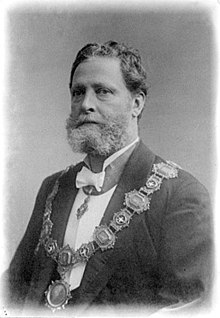
As one drives along the most monument filled area of the Ringstrasse, one may notice that part of the famous street as well as two statues remember Karl Leuger.
As opposed to the extremes of others of the time, Karl Leuger, was a more pragmatic “Schwarz-gelb,” a believer in Austria with populist ideals at the turn of the century. An opportunist, Leuger changed to the democratic camp and used anti-Semitism to promote Vienna’s native son to higher offices. He quickly broke with anti-Semitic extremism of Schönerer to create the Christian Socialist Party, centered on the interest of “little men” and “Greater Austria.” However, he did continue to support the Germanic supremesist, Guido von List.
His time in office as mayor of Vienna (1897 to 1910) was highlighted by improvements in city living: construction of public buildings; development of the tramway systems; the Wiener Hochquellwasserleitung, which still brings fresh water from nearby the mountains; and the creation of a greenbelt of meadows and forests around the city.
However, Leuger’s policies slid in to dictatorship as the people worshiped their new hero, leaving a legacy that is said to have led the way to Austro-Fascism and even Hitler's reign of terror.
As one hymn sung his praises:
Let us praise the hero, who leads us in the fight.
Joyfully show him praise and thanks which are his due.
Let us also raise our hands in prayer,
May God make us victorious, wherever his banner flies.
31 August 2010
Jewish Renaissance in Vienna
In an attempt to understand Austrian reputation of anti-Semintism, this is an excerpt from my study of Vienna's history:
In a way, the hateful political extremes, like pan-Germanic Schönererists carrying pocket watches with chains set to look like a Jewish man on a hangman’s nooses, was outlet of rebellion after a century of oppression. Feelings of frustration sprang up from the differing factions of the bickering Parliament because no one seemed to have the skill or knowledge of how to lead by consensus. In 1867 Jews were declared equal under the law and within twenty years, sixty percent of Vienna’s doctors and fifty percent of lawyers were racially Jews. Some of these citizens became very successful in banking and in the stock exchange, particularly Salomon Rothschild and his clan. The class structure that oppressed the Austrians also allowed led them to condemn Jews for their new success as citizens. The Jews were once out-castes, and now, they were successful in working their way up the once impenetrable pyramid of society. In some eyes, these out-castes deserved punishment for their success.
Regardless, Jews continued to contribute to the culture for which Vienna was so proud. Some of the famous people of this Renaissance from 1848-1938 include: Fanny Arstein, who hosted a salon attended by the major personalities of the time; prominent Jewish physicians included Sigmund Freud, Alfred Adler, Wilhelm Reich and Theodor Reik; in the field of Zionist politics, Theodore Herzl and Max Nordau; theologian, Martin Buber also lived in Vienna; in music, Gustav Mahler, Arnold Schoenberg, Oscar Straus, Emmerich Kalman, Max Reinhardt, Fritz Kortner, Lily Darvas and Elisabeth Berner; and writers Arthur Schnitzler, Franz Kafka, Stefan Zweig and Felix Salten.
Here's a silent film from 1924 meant to remind the people of Vienna of the Cultural vacuum that would happen in the city if the Jews were expelled:
In a way, the hateful political extremes, like pan-Germanic Schönererists carrying pocket watches with chains set to look like a Jewish man on a hangman’s nooses, was outlet of rebellion after a century of oppression. Feelings of frustration sprang up from the differing factions of the bickering Parliament because no one seemed to have the skill or knowledge of how to lead by consensus. In 1867 Jews were declared equal under the law and within twenty years, sixty percent of Vienna’s doctors and fifty percent of lawyers were racially Jews. Some of these citizens became very successful in banking and in the stock exchange, particularly Salomon Rothschild and his clan. The class structure that oppressed the Austrians also allowed led them to condemn Jews for their new success as citizens. The Jews were once out-castes, and now, they were successful in working their way up the once impenetrable pyramid of society. In some eyes, these out-castes deserved punishment for their success.
Regardless, Jews continued to contribute to the culture for which Vienna was so proud. Some of the famous people of this Renaissance from 1848-1938 include: Fanny Arstein, who hosted a salon attended by the major personalities of the time; prominent Jewish physicians included Sigmund Freud, Alfred Adler, Wilhelm Reich and Theodor Reik; in the field of Zionist politics, Theodore Herzl and Max Nordau; theologian, Martin Buber also lived in Vienna; in music, Gustav Mahler, Arnold Schoenberg, Oscar Straus, Emmerich Kalman, Max Reinhardt, Fritz Kortner, Lily Darvas and Elisabeth Berner; and writers Arthur Schnitzler, Franz Kafka, Stefan Zweig and Felix Salten.
Here's a silent film from 1924 meant to remind the people of Vienna of the Cultural vacuum that would happen in the city if the Jews were expelled:
26 August 2010
The Old Social Pyramid
1848 . . . the Emperor absently piped up, “I’m the sovereign and I’m the one to decide. Tell the people I agree with everything.”
That a feeble-minded man, who had little to do with the inner workings of government, was able to give success (albeit limited) to a revolution by one comment seems ridiculous. However, this is a prime example of the pyramid of society that informed the working of Austria’s society. It was almost a caste system, impossible to cross its lines within one’s lifetime. Society taught that God put people in their place by the family in which they were born, not by any virtues a person may possess.
In the pinnacle were the Hapsburgs, the demi-god Archdukes with the Emperor leading. Below them were the rest of the nobility (Hochadel and Adel); then the class, Honoratior, of non-noble bureaucrats, university graduates, and professionals; next were the middle-class shop workers, Bughers; and those crowded at the bottom, the Proleten (peasants), who generated the wealth of the nation.
The different classes only saw each other in specific circumstances. There was no marriage allowed between classes. The Hapsburgs were expected to choose mates from the Hochadel. Meaning, when Franz Ferdinand wanted to marry a mere countess in 1900, he had to sign documents that his children would not aspire to the crown and his wife was not allowed elevate her standing by ever standing or sitting by her husband and his equals. This points to how special it was that, far from Vienna, they were given special permission from the Emperor in celebration of their anniversary to sit next to each other in public. Tragically, they were also assassinated together, starting WWI.
Today, Language, education, and job choices still lean toward the class of the a person's family. A person from a less birth-related culture would be wise to keep this in mind to understand people's reactions and comments, especially in regards to the groups to which they do not belong.
While noble titles were abolished along with the monarchy in the 20th century, modern Viennese society still acts according to or in rebellion against the memory of these expectations. Most are still in love with the use of titles. The highest officially allowed is Professor Doctor (a PhD who teaches in university), thereby making education all more honored. To squeeze the last bit out of this, no matter the number of doctorates you have, they just it tack on in any written address. For one written example "Herr Prof. Dr. Dr. h.c. Schmidt," and so on. Academic titles are important, but so are practical accomplishments. Master craftsmen are addressed as "Herr Meister Schmidt."
In person, one should address a new acquaintance as Herr or Frau and their highest title until told differently. This also should be remembered when making and receiving business cards. Put all post graduate credentials at the end of your name so people will know how to address you. They only address certain titles outloud, but they will interested to know if you have a master's, for instance.
[Recent changes to the university system may affect the use of MA. As a title in the old system of Vienna's Universities this title was only given to those who had made a particular kind of degree called a "Magister". I'm not clear how they will adjust to the bachelor/masters system.]
That a feeble-minded man, who had little to do with the inner workings of government, was able to give success (albeit limited) to a revolution by one comment seems ridiculous. However, this is a prime example of the pyramid of society that informed the working of Austria’s society. It was almost a caste system, impossible to cross its lines within one’s lifetime. Society taught that God put people in their place by the family in which they were born, not by any virtues a person may possess.
In the pinnacle were the Hapsburgs, the demi-god Archdukes with the Emperor leading. Below them were the rest of the nobility (Hochadel and Adel); then the class, Honoratior, of non-noble bureaucrats, university graduates, and professionals; next were the middle-class shop workers, Bughers; and those crowded at the bottom, the Proleten (peasants), who generated the wealth of the nation.
The different classes only saw each other in specific circumstances. There was no marriage allowed between classes. The Hapsburgs were expected to choose mates from the Hochadel. Meaning, when Franz Ferdinand wanted to marry a mere countess in 1900, he had to sign documents that his children would not aspire to the crown and his wife was not allowed elevate her standing by ever standing or sitting by her husband and his equals. This points to how special it was that, far from Vienna, they were given special permission from the Emperor in celebration of their anniversary to sit next to each other in public. Tragically, they were also assassinated together, starting WWI.
Today, Language, education, and job choices still lean toward the class of the a person's family. A person from a less birth-related culture would be wise to keep this in mind to understand people's reactions and comments, especially in regards to the groups to which they do not belong.
While noble titles were abolished along with the monarchy in the 20th century, modern Viennese society still acts according to or in rebellion against the memory of these expectations. Most are still in love with the use of titles. The highest officially allowed is Professor Doctor (a PhD who teaches in university), thereby making education all more honored. To squeeze the last bit out of this, no matter the number of doctorates you have, they just it tack on in any written address. For one written example "Herr Prof. Dr. Dr. h.c. Schmidt," and so on. Academic titles are important, but so are practical accomplishments. Master craftsmen are addressed as "Herr Meister Schmidt."
In person, one should address a new acquaintance as Herr or Frau and their highest title until told differently. This also should be remembered when making and receiving business cards. Put all post graduate credentials at the end of your name so people will know how to address you. They only address certain titles outloud, but they will interested to know if you have a master's, for instance.
[Recent changes to the university system may affect the use of MA. As a title in the old system of Vienna's Universities this title was only given to those who had made a particular kind of degree called a "Magister". I'm not clear how they will adjust to the bachelor/masters system.]
23 August 2010
Austria's Expasion Emperors (Who didn't live in Vienna)
Emperor Maximilian I
Although he never lived in his capital, one remarkable Hapsburg transformed the family from a secondary European royal house in to a world power within fifty years. More remarkable still, is that he was able to expand his lands primarily through marriages, money and diplomacy. Maximilian I (1459-1519) was the picture of the Renaissance Prince. He was very religious, spoke seven languages, humorous, skilled in arms crafting, and loved tournaments and hunting. He was a patron of the sciences and arts and insisted on demonstrating his dynasty's dominance with processions and portraits. Though his empire has crumbled of time, his legacy remains as Austrians look to diplomacy, rather than war, as the true maker and most positive element of Austrian culture.
After his marriage to the heiress, Mary of Burgundy, in 1477 Maximilian lived in the Netherlands to secure the Burgundy patrimony for his children. Then, when he was elected Roman King, he purchased Tyrol and the forelands, and reoccupied Lower Austria. He had himself proclaimed "Elected Roman Emperor" and claimed Bohemia and Hungary under the Treaty of Inheritance of 1463. In 1493 he inherited the rest of the Habsburg countries from his father and united them all.
Maximilian secured his possessions at the Vienna Conference of Princes in 1515 with the double marriage of the heir of Hungary throne, Louis, and Maximilian's granddaughter Mary; and between her brother, Archduke Ferdinand, and the Hungarian king’s daughter, Anna. While all parties of this marriage were minors at the time of the double knot, this wedding became the ground work of the Austrian-Hungarian Empire and stretched Hapsburg lands east to Bohemia and Hungary. It is not surprising, then, that Austria was tagged with the saying, “Let others wage war; you, happy Austria, marry.”
Charles of Europe
Maximilian also married off his only son, Philip the Fair, to the Princess Joanna of Spain in 1496. Philip and Joanna’s son, Emperor Charles V, inherited all the Austrian, Portuguese and Spanish lands, including vast lands in the Americas, creating a true world power. While this broadened the power of the Hapsburgs, such large expanses only continued to separate the Austrian heartland from its sovereigns. In fact, Charles V is said to have only visited Vienna once in his life. In the Edicts of Worms and Brussels he divided his territories, giving the traditional Hausmacht of Austria to his brother Ferdinand I in 1521. Charles V kept the Imperial title until 1556 when he abdicated, passing it over to the Austrian Habsburg line in 1558.
Although he never lived in his capital, one remarkable Hapsburg transformed the family from a secondary European royal house in to a world power within fifty years. More remarkable still, is that he was able to expand his lands primarily through marriages, money and diplomacy. Maximilian I (1459-1519) was the picture of the Renaissance Prince. He was very religious, spoke seven languages, humorous, skilled in arms crafting, and loved tournaments and hunting. He was a patron of the sciences and arts and insisted on demonstrating his dynasty's dominance with processions and portraits. Though his empire has crumbled of time, his legacy remains as Austrians look to diplomacy, rather than war, as the true maker and most positive element of Austrian culture.
After his marriage to the heiress, Mary of Burgundy, in 1477 Maximilian lived in the Netherlands to secure the Burgundy patrimony for his children. Then, when he was elected Roman King, he purchased Tyrol and the forelands, and reoccupied Lower Austria. He had himself proclaimed "Elected Roman Emperor" and claimed Bohemia and Hungary under the Treaty of Inheritance of 1463. In 1493 he inherited the rest of the Habsburg countries from his father and united them all.
Maximilian secured his possessions at the Vienna Conference of Princes in 1515 with the double marriage of the heir of Hungary throne, Louis, and Maximilian's granddaughter Mary; and between her brother, Archduke Ferdinand, and the Hungarian king’s daughter, Anna. While all parties of this marriage were minors at the time of the double knot, this wedding became the ground work of the Austrian-Hungarian Empire and stretched Hapsburg lands east to Bohemia and Hungary. It is not surprising, then, that Austria was tagged with the saying, “Let others wage war; you, happy Austria, marry.”
Charles of Europe
Maximilian also married off his only son, Philip the Fair, to the Princess Joanna of Spain in 1496. Philip and Joanna’s son, Emperor Charles V, inherited all the Austrian, Portuguese and Spanish lands, including vast lands in the Americas, creating a true world power. While this broadened the power of the Hapsburgs, such large expanses only continued to separate the Austrian heartland from its sovereigns. In fact, Charles V is said to have only visited Vienna once in his life. In the Edicts of Worms and Brussels he divided his territories, giving the traditional Hausmacht of Austria to his brother Ferdinand I in 1521. Charles V kept the Imperial title until 1556 when he abdicated, passing it over to the Austrian Habsburg line in 1558.
The Capital of the Holy Roman Empire
By 1440, Vienna became the main resident city of the Habsburg Dynasties and the capital of the Holy Roman Empire (1452) as well as the cultural centre for arts and science, music and fine cuisine. The economic mainstays were trade and wine export. Wine production was protected by import bans on foreign, particularly Hungarian, wines. Political unrest ending with the Hungarian occupation of Vienna under King Matthias I Corvinus (1485 - 1490). Vienna's economy was affected drastically. The "Stapelrecht," became ineffective. So, the Habsburgs turned to financial prowess of powerful trade dynasties such as the Fuggers. This time also marked the end of late medieval burgher autonomy of Vienna as it was now the center of a vast empire.
During this time, a mystery was left behind that can be seen on the doorways of castles and cathedrals built in the reign of Frederick III (1440-1499). The vowels AEIOU are carved over archways and portals; however; the cipher was never spelled out. All those who knew are long deceased. Some have mistakenly claimed various explanations in German and Latin, including the “Austrian birthmark,” “Austria will survive all others on earth.” Most of this conjecture has proved to be anachronistic and almost as cryptic as the vowels themselves. Perhaps the sovereign simply enjoyed the Latin vowels.

During this time, a mystery was left behind that can be seen on the doorways of castles and cathedrals built in the reign of Frederick III (1440-1499). The vowels AEIOU are carved over archways and portals; however; the cipher was never spelled out. All those who knew are long deceased. Some have mistakenly claimed various explanations in German and Latin, including the “Austrian birthmark,” “Austria will survive all others on earth.” Most of this conjecture has proved to be anachronistic and almost as cryptic as the vowels themselves. Perhaps the sovereign simply enjoyed the Latin vowels.

Rudolph "The Founder"
Duke Rudolph IV is unique among the Hapsburgs in his early attempt to create a sense of “Austria” on the same vein as England and France. The intellectual appeal of Vienna was dramatically enriched when Rudolph establishment of the University of Vienna. “The Founder,” founded the Alma Mater Rudolphina Vindobonensi on 12 March 1365 as the first university in the German speaking world. In the dedication, Rudolph states his desire: “For the special honor and enhancement of our land Austria and of our city, Vienna.” With this aim, the members of this universitas magistrorum et scholarium (the fellowship of teachers and learners) were exempt from taxes and military service.
Rudolph IV also attempted to develop an Austrian identity by bringing in troubadours to sing of, “The fairest land on earth,” and Monk historian, Leopold Stainreuter, wrote the Chronicle of the Ninety-five Estates which is a precursor to an Austrian history. Nevertheless, even the names of the work belie no unified identity existed among the Estates. His attempts did seem to work with the Privilegium Maius, the “Great Patent of Freedom,” which gave Austria independence from the German Reich. Unfortunately, such an idea was still fresh when the Hapsburgs became the Kings of Germany and the title of Holy Roman Emperor of the German Nation, superseding all independent identity under the label as the Hapsburg’s Hausmacht, or hereditary territorial base.
Rudolph IV also attempted to develop an Austrian identity by bringing in troubadours to sing of, “The fairest land on earth,” and Monk historian, Leopold Stainreuter, wrote the Chronicle of the Ninety-five Estates which is a precursor to an Austrian history. Nevertheless, even the names of the work belie no unified identity existed among the Estates. His attempts did seem to work with the Privilegium Maius, the “Great Patent of Freedom,” which gave Austria independence from the German Reich. Unfortunately, such an idea was still fresh when the Hapsburgs became the Kings of Germany and the title of Holy Roman Emperor of the German Nation, superseding all independent identity under the label as the Hapsburg’s Hausmacht, or hereditary territorial base.
Hapsburg Beginnings
When Rudolf von Habsburg, a relatively minor Swiss count, was elected German king in 1273, no one suspected that the Hapsburg age dawned. However, his defeat of the Bohemian King Ottarbar II outside of Vienna set the course for six centuries of Hapsburg dominance. The Middle Ages were the heyday of Vienna’s autonomy. By 1396 the people involved within the city government included burghers (upper middleclass) as well as tradesmen and craftsmen. Political and social tensions in Vienna were mostly reflected feudal quarreling within the Habsburg family, who lost the imperial crown upon the death of Frederick the Fair (1330) for more than a century. They re-ascended in 1438, when Albert II came to power.
The growing economy funded the city’s buildings as it was refashioned in Gothic style, including the church of St. Stephen's, which is now Stephansdom (St Stephan’s Cathedral). However, not all citizens enjoyed this time equally. Remnants early anit-Semintic Vienna is seen on an epigraph in the Judenplatz (Jewish Plaza), "In the Jordan-River where the body gets purified from all evil / also hidden sins are moving away / in the year 1421 vindictiveness raged through the city / to atone for the terrifying crimes of the Hebrew rats / once the world was purified by the flood / but now they paid their guilt through flames".
The growing economy funded the city’s buildings as it was refashioned in Gothic style, including the church of St. Stephen's, which is now Stephansdom (St Stephan’s Cathedral). However, not all citizens enjoyed this time equally. Remnants early anit-Semintic Vienna is seen on an epigraph in the Judenplatz (Jewish Plaza), "In the Jordan-River where the body gets purified from all evil / also hidden sins are moving away / in the year 1421 vindictiveness raged through the city / to atone for the terrifying crimes of the Hebrew rats / once the world was purified by the flood / but now they paid their guilt through flames".
Early Vienna through the 13th Century
Early
The city of Vienna was founded c. 500 BC as a Celtic settlement, Vendunia, (forest stream). All that remains of this society is the May Poles that every Austrian village and some Viennese districts erect in their squares. By 15 BC the migrations of peoples brought the Germanic tribes and the Romans, the latter of which referred to the area as Vindobona. The fortification wall of that ancient post is remembered to this day by significant streets in the city center. The Romans saw the Danube as the line between the civilized world of the Empire and the Germanic tribes to the north. Charlemagne also considered the region, the Avarian Mark, as a last out post of his empire. Remaining artifacts from the time include the remnants of the first Christian churches; however, most were probably destroyed by pagan Germanic tribes who warred with the Eastern Frankish Christians.
Vienna was first mentioned by its current German name, Wien, in 881 during the turbulent times of Magyar (Hungarian) expansion. The first historical reference to Austria as a kind of political region was in 996 AD when the Babenberg Family was given margrave authority over Ostarrichi, (Eastern Kingdom). The establishment of a margravate encouraged settlement and of course trade in the area, but Vienna continued to sit on the Magyar frontier until 1150 when the Austrian margraves, who were also dukes of Bavaria, transferred their residence to Vienna. In 1156 Fredrick I elevated the Babenburg territory to a duchy, thereby giving the dukes some autonomy from the emperor. Frederick also gave the Austrian people the red-white-red flag from him battle banner as well as a black eagle from his family crest.
A fortified wall was built around with city c.1200 and by 1221 Vienna was the second principal city of the Frankish Empire after Cologne, due to its trade network on the Danube and connections with Venice. A major improvement for the city came with the Stapelrecht (merchant regulating laws) which allowed for a middle class to develop. There was growing construction at the time even outside the walls along the major arteries around Vienna. The city walls completion was timely because Vienna came under threat from the Mongolian Empire in the 13th century. Mongol forces were moving toward Vienna as part of a large scale winter campaign in order to take control of Europe, when Ögedei Khan, son of Genghis Khan, died. Some historians claim that if he had not died, Vienna could have been one of the first of the Western European nations to fall under Mongol rule of the entire continent.
The city of Vienna was founded c. 500 BC as a Celtic settlement, Vendunia, (forest stream). All that remains of this society is the May Poles that every Austrian village and some Viennese districts erect in their squares. By 15 BC the migrations of peoples brought the Germanic tribes and the Romans, the latter of which referred to the area as Vindobona. The fortification wall of that ancient post is remembered to this day by significant streets in the city center. The Romans saw the Danube as the line between the civilized world of the Empire and the Germanic tribes to the north. Charlemagne also considered the region, the Avarian Mark, as a last out post of his empire. Remaining artifacts from the time include the remnants of the first Christian churches; however, most were probably destroyed by pagan Germanic tribes who warred with the Eastern Frankish Christians.
Vienna was first mentioned by its current German name, Wien, in 881 during the turbulent times of Magyar (Hungarian) expansion. The first historical reference to Austria as a kind of political region was in 996 AD when the Babenberg Family was given margrave authority over Ostarrichi, (Eastern Kingdom). The establishment of a margravate encouraged settlement and of course trade in the area, but Vienna continued to sit on the Magyar frontier until 1150 when the Austrian margraves, who were also dukes of Bavaria, transferred their residence to Vienna. In 1156 Fredrick I elevated the Babenburg territory to a duchy, thereby giving the dukes some autonomy from the emperor. Frederick also gave the Austrian people the red-white-red flag from him battle banner as well as a black eagle from his family crest.
A fortified wall was built around with city c.1200 and by 1221 Vienna was the second principal city of the Frankish Empire after Cologne, due to its trade network on the Danube and connections with Venice. A major improvement for the city came with the Stapelrecht (merchant regulating laws) which allowed for a middle class to develop. There was growing construction at the time even outside the walls along the major arteries around Vienna. The city walls completion was timely because Vienna came under threat from the Mongolian Empire in the 13th century. Mongol forces were moving toward Vienna as part of a large scale winter campaign in order to take control of Europe, when Ögedei Khan, son of Genghis Khan, died. Some historians claim that if he had not died, Vienna could have been one of the first of the Western European nations to fall under Mongol rule of the entire continent.
Historical Perspective:
When studying Vienna, one could learn quite a bit of world history based on the peoples who have settled, left, or attempted to conquer this part of the Danube valley. Austria and its capital developed an identity as a dividing line between barbarians and Roman civilization, Pagans and Christians, Slavs and Germans, East and West. Compared to what developed in Paris and London, the six centuries of Hapsburg rulers lacked any profound bond with the lands they ruled. Therefore, any sense of patriotism in Vienna is civic pride. Austrian autocrats thought of God as the source of their power through the state Church. With a paternalistic mentality, they used increasingly invasive policing, censorship, and an, “informer society” in order to create what they believed to be the ideal civilization. Ideals from the Reformation, Enlightenment, and finally nationalism locked the people of Vienna in turmoil climaxing with the collapse of the monarchy and then the bewildered remnant’s absorption into Nazi Germany.
The affects of outward compliance have led many like Erwin Ringel, famous Austrian psychoanalyst and social critic, to describe Austria as a land of neuroses. This oppressive state also points to Austria’s surprising suicide rate, fear of risk, and fixation with death. Vienna has emerged from collapse after World War II to rediscover the assets of a multi-national identity and location, leading Vienna to success as a global center of commerce and diplomacy. Nevertheless, despite the fact that Vienna consistently ranks among the top cities in the world for quality of life, a typical response to hearing about a suicide is, “He's so lucky, he has left everything behind.” While there are spiritual implications that the wealth of the ciity is not enough to counter balance Vienna’s “desert” of spirituality, the history of oppression also reminds us that the Austrian culture has still not fully embraced freedom, thereby maintaining this place as a desert. The Viennese honor-shame social system remains with an ambivalence toward the individual over social norms.
The affects of outward compliance have led many like Erwin Ringel, famous Austrian psychoanalyst and social critic, to describe Austria as a land of neuroses. This oppressive state also points to Austria’s surprising suicide rate, fear of risk, and fixation with death. Vienna has emerged from collapse after World War II to rediscover the assets of a multi-national identity and location, leading Vienna to success as a global center of commerce and diplomacy. Nevertheless, despite the fact that Vienna consistently ranks among the top cities in the world for quality of life, a typical response to hearing about a suicide is, “He's so lucky, he has left everything behind.” While there are spiritual implications that the wealth of the ciity is not enough to counter balance Vienna’s “desert” of spirituality, the history of oppression also reminds us that the Austrian culture has still not fully embraced freedom, thereby maintaining this place as a desert. The Viennese honor-shame social system remains with an ambivalence toward the individual over social norms.
Subscribe to:
Posts (Atom)